
 Call us now:

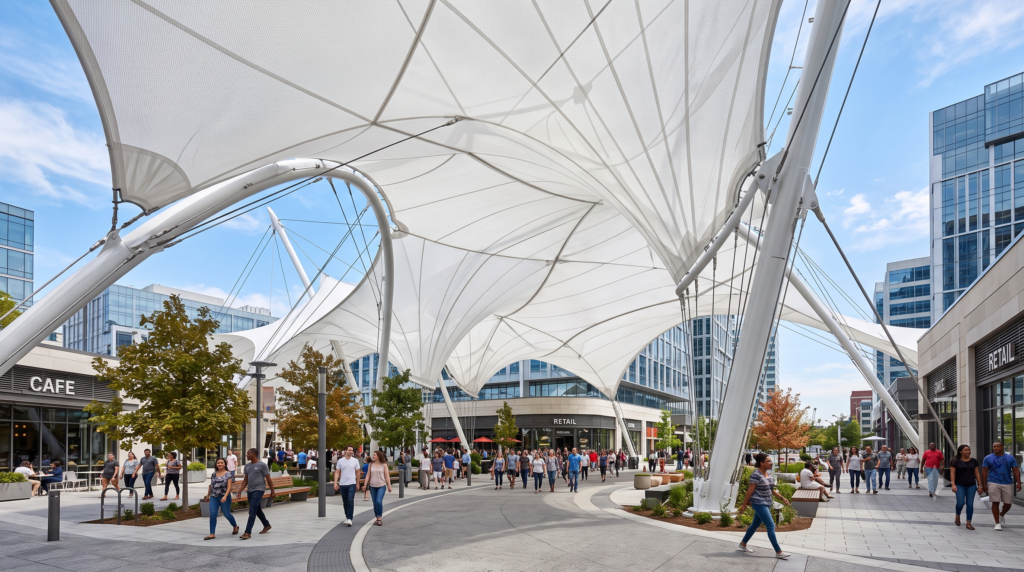
Tensile roof structures are a modern roofing solution that combines strength, style, and functionality. They are made using strong fabric membranes supported by steel frames, cables, or other structural systems. These roofs are a great choice for large open areas such as auditoriums, terraces, stadiums, commercial spaces, and event areas.
History of Tensile Roof Structures
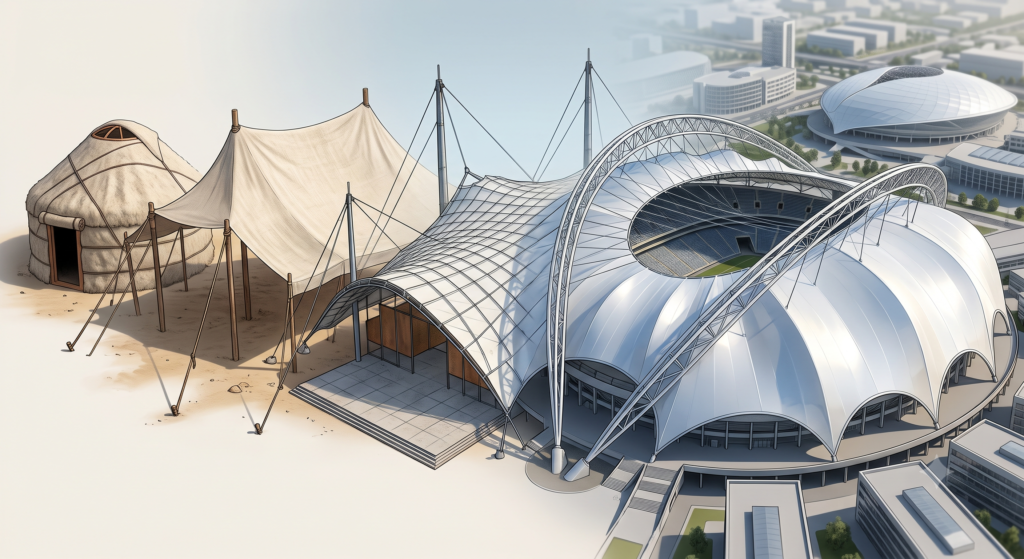
The idea of tensile structures is inspired by traditional tents and fabric shelters that have been used for thousands of years. Modern tensile roofing became popular during the 20th century as architects and engineers started looking for lightweight and creative roofing solutions.
The development of materials such as PVC-coated polyester and PTFE-coated fabrics made tensile roofs stronger and more durable. Engineer and architect Frei Otto played an important role in the development of modern tensile architecture. One famous example is the roof of the Munich Olympic Stadium.
Today, tensile structures can be seen in airports, stadiums, shopping areas, exhibition centers, and public spaces around the world.
Scope of Tensile Roof Structures
The use of tensile roof structures is growing because they can cover large areas without needing many supporting columns. This makes them suitable for modern buildings where open and spacious areas are important.
They are commonly used in:
- Stadiums and sports facilities
- Exhibition and event halls
- Airports and transportation areas
- Commercial buildings
- Terraces and outdoor spaces
- Auditoriums
- Temporary event structures
- Parking and walkway coverings
As modern construction continues to focus on attractive, lightweight, and efficient designs, the demand for tensile roofing is expected to grow.
Types of Tensile Roof Structures
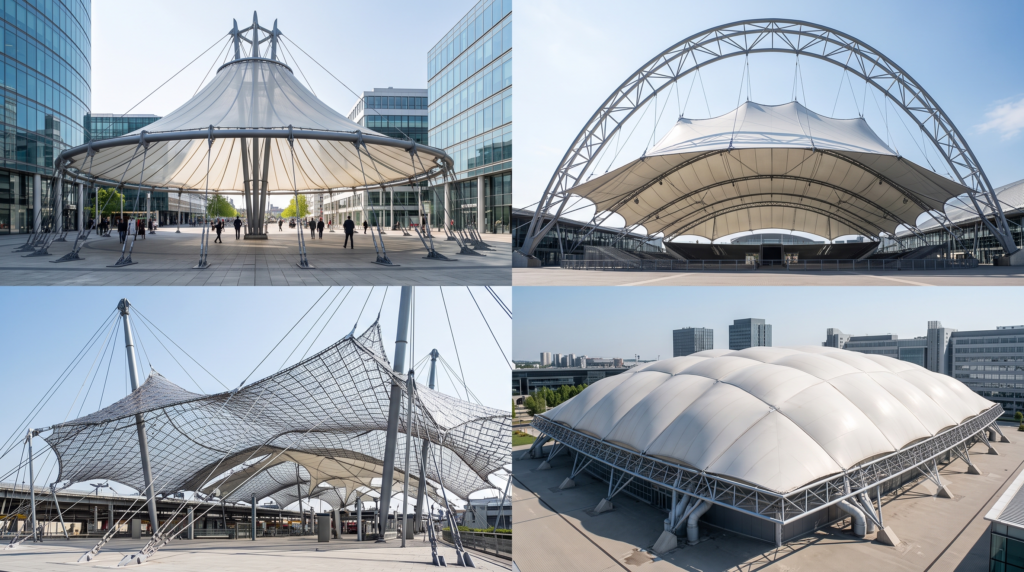
There are different types of tensile roof structures based on their design and support system.
Conical Tensile Roofs: These roofs have a cone-like shape and are often used where both appearance and function are important.
Arch-Supported Roofs: These structures use curved steel or aluminum frames to support the roofing membrane.
Cable-Supported Roofs: Strong cables are used to support and tension the membrane, making them suitable for large areas.
Pneumatic Structures: These roofs use air pressure to maintain their shape and are generally used for large-scale spaces.
Why Choose Tensile Roof Structures?
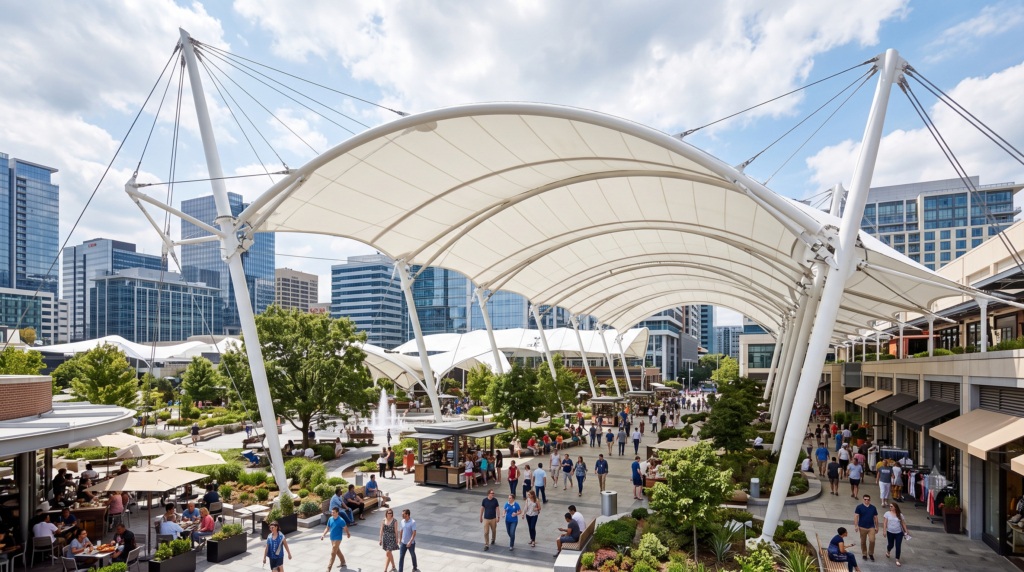
ensile roofs offer several benefits compared with traditional roofing systems. They are lightweight but strong and can be designed in many attractive shapes. They also need less structural material, which can help reduce construction costs.
Another major benefit is their ability to provide protection from sunlight, rain, and other weather conditions. Special roofing fabrics can also help reduce heat and UV exposure.
Tensile structures are also relatively quick to install and usually require less maintenance. Their modern appearance makes them a popular choice for architects and property owners who want a stylish and practical roofing solution.
Conclusion
Tensile roof structures are an excellent combination of strength, beauty, durability, and modern design. They can cover large open spaces while creating an attractive architectural appearance. With improvements in materials and construction technology, tensile roofing is becoming an increasingly popular choice for commercial, public, and residential projects.
For anyone looking for a roofing system that is lightweight, durable, low-maintenance, and visually appealing, tensile roof structures can be a smart modern solution.